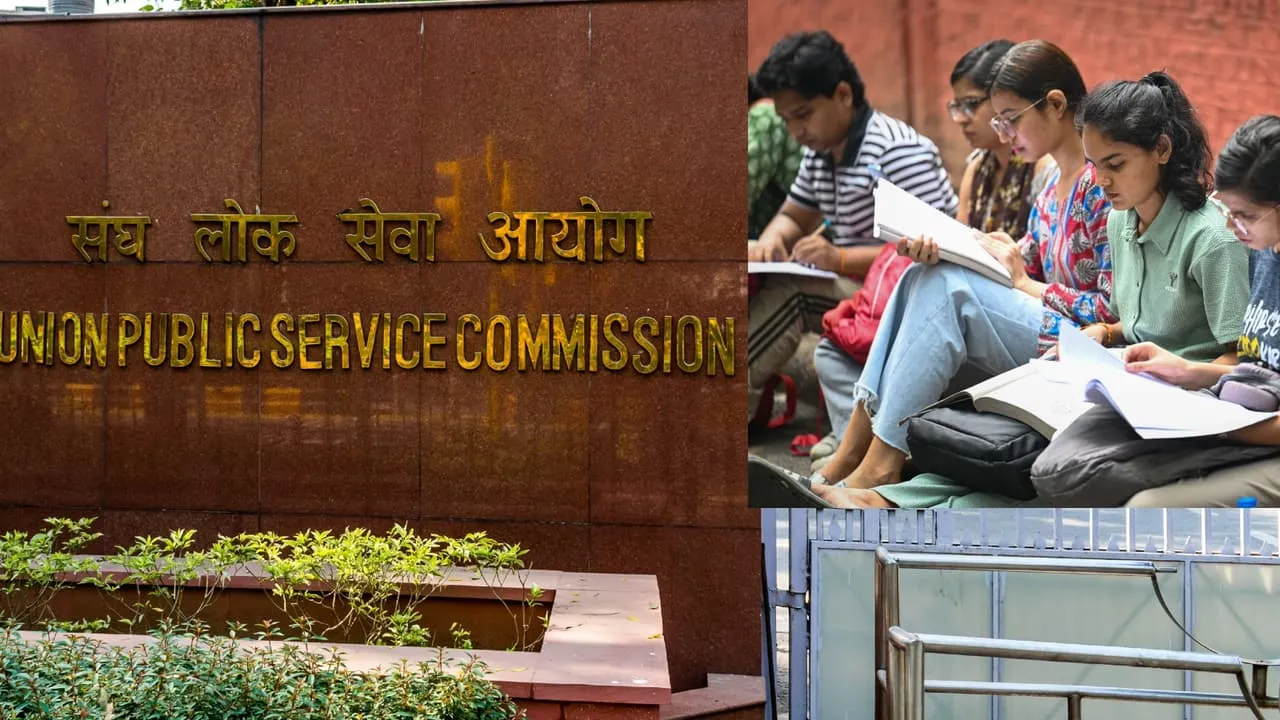
The Union Public Service Commission Civil Services Examination remains one of the most competitive and respected examinations in India. Every year, lakhs of aspirants prepare with the dream of becoming IAS, IPS, or IFS officers and contributing to nation building. As preparations for UPSC CSE 2026 begin in earnest, understanding the rules related to the number of attempts, age limits, and category-wise eligibility becomes extremely important. Many promising candidates fail not due to lack of preparation, but because of confusion around eligibility norms. This detailed guide explains category-wise attempts, key rules, and important conditions for IAS, IPS, and IFS aspirants in a clear and structured manner.
Overview of UPSC Civil Services Examination
The UPSC Civil Services Examination is conducted annually in three stages. The first stage is the Preliminary Examination, followed by the Main Examination, and finally the Personality Test or Interview. Candidates who clear all three stages are ranked and allocated services such as Indian Administrative Service, Indian Police Service, Indian Foreign Service, and other central services based on rank, preference, and eligibility.
The examination is governed strictly by rules notified in the official UPSC notification. These rules include age limits, educational qualification, nationality requirements, physical standards, and the maximum number of attempts permitted for each category.
Why Category-Wise Attempt Rules Matter
The number of attempts allowed in UPSC varies according to the candidate’s category. An attempt is counted when a candidate appears in at least one paper of the Preliminary Examination. Even if a candidate does not qualify prelims, the attempt is counted.
Understanding how many attempts remain helps aspirants plan their preparation cycle strategically. It also helps avoid disqualification due to exceeding the allowed number of attempts.
General Category Attempts and Rules
Candidates belonging to the General category are allowed a maximum of six attempts in the Civil Services Examination. The upper age limit for General category candidates is 32 years as on the cutoff date mentioned in the notification, usually August 1 of the examination year.
Once a General category candidate exhausts all six attempts or crosses the age limit, they become ineligible to appear further, regardless of preparation level or previous performance.
OBC Category Attempts and Age Limit
Candidates belonging to the Other Backward Classes category are allowed nine attempts. The upper age limit for OBC candidates is 35 years, which includes an age relaxation of three years compared to the General category.
OBC candidates must ensure that they belong to the non-creamy layer and possess a valid OBC certificate in the prescribed format to claim these relaxations.
SC and ST Category Attempts
Scheduled Caste and Scheduled Tribe candidates enjoy the maximum relaxation. There is no limit on the number of attempts for SC and ST candidates as long as they remain within the prescribed age limit.
The upper age limit for SC and ST candidates is 37 years. This relaxation reflects the government’s policy to provide greater opportunities to candidates from historically disadvantaged backgrounds.
EWS Category Attempt Rules
Economically Weaker Section candidates are treated at par with the General category in terms of the number of attempts. EWS candidates are allowed six attempts with an upper age limit of 32 years.
However, EWS candidates must meet the income and asset criteria laid down by the government and produce a valid EWS certificate to claim this status.
Special Relaxations for Certain Categories
Candidates with benchmark disabilities are provided additional relaxations. General and EWS category candidates with benchmark disabilities are allowed nine attempts, while OBC candidates with benchmark disabilities are allowed nine attempts with an extended age limit.
SC and ST candidates with benchmark disabilities continue to have unlimited attempts within the relaxed age limit, which can extend up to 42 years depending on the category.
Ex-servicemen and defense service personnel disabled in operations also receive age relaxations as specified in the notification.
Nationality Rules for IAS, IPS, and IFS
Nationality requirements differ slightly across services. For IAS and IPS, a candidate must be a citizen of India. Certain categories of persons of Indian origin or refugees from specified countries may be allowed for other services, but not for IAS and IPS.
For the Indian Foreign Service, the candidate must be a citizen of India without exception. This is due to the sensitive nature of diplomatic responsibilities and representation of the country abroad.
Educational Qualification Requirements
To be eligible for UPSC CSE 2026, a candidate must hold a graduate degree from a recognized university. Final year students can also apply, provided they submit proof of passing before the Main Examination.
There is no restriction on the stream or discipline. Engineers, doctors, arts graduates, commerce students, and science graduates all compete on equal footing.
Physical and Medical Standards for IPS and IFS
While IAS does not have strict physical requirements beyond general medical fitness, IPS aspirants must meet specific physical standards related to height, chest, and vision.
The Indian Foreign Service also requires candidates to meet medical fitness standards suitable for long-term foreign postings, which may include different climatic and health conditions.
Failure to meet medical standards can lead to denial of service allocation even after clearing all examination stages.
How Attempts Are Counted
An attempt is counted when a candidate appears for at least one paper of the Preliminary Examination. Simply filling the application form does not count as an attempt.
Candidates who download the admit card but do not appear in any paper are not counted as having made an attempt.
Understanding this rule helps aspirants decide whether to appear in a particular year or skip and prepare better for the next attempt.
Common Mistakes Aspirants Make
Many aspirants miscalculate their remaining attempts or misunderstand age relaxation rules. Another common mistake is assuming that category change is allowed between attempts. Category once claimed cannot usually be changed unless supported by valid documentation and within the rules.
Ignoring medical standards, especially for IPS, is another major oversight that can cost a candidate their dream service.
Strategic Planning Based on Attempts
Candidates with limited attempts should focus on strong preparation before appearing for prelims. Treating each attempt seriously is crucial, as wasted attempts reduce future opportunities.
Those with more attempts available should still avoid complacency. Quality preparation and continuous improvement matter more than the number of attempts.
Conclusion
UPSC CSE 2026 eligibility rules, especially those related to category-wise attempts and age limits, form the foundation of a successful civil services journey. Aspirants aiming for IAS, IPS, or IFS must clearly understand how many attempts they have, the age limits applicable to them, and the service-specific requirements.
A clear grasp of these rules helps candidates plan better, avoid unnecessary disqualification, and focus fully on preparation. With disciplined study, realistic planning, and awareness of eligibility norms, aspirants can maximize their chances of success in the highly competitive Civil Services Examination.